
Posture Support Products
Looking for Back Posture Support Products that will give you some badly needed Back Pain Relief?
Please read the following first to ensure that you don’t end up wasting your money - AND still have back pain!
For example you could spend 700 euro on an Orthopaedic Chair, and find little or no improvement to your back pain. Why? well if you have not correctly identified and are working to address the underlying cause of your back pain, then the ‘product’ will do little to help you. The key word is ‘Support’ - the product should support you in your management of back pain. You shouldn’t rely on it to do the work.
I have included an overview of many Back Posture Support Products in these selection of articles, and will update this section with new products I find when they become available.
Sponsored links
Back Support Chair »

Too often, I have seen a back support chair which does not help people with their back pain.
Lumbar Support Belt »

Lumbar Support Belt - advice on when to use them.
Lumbar Support for Office Chairs »

There are many types of lumbar support office chair available today. The quality of a lumbar support chair is very important, and in my experience, price does not always reflect quality.
Lumbar Support Pillow »
My preferred choice is that all my clients learn how to support their lumbar spine actively. This involves learning where your lumbar spine should be when you sit and stand, and secondly doing specific strengthening exercises to make this lumbar-supported…
Pilates Equipment »
Beyond the Pilates Exercise Mat - there are many types of Pilates equipment used within the Pilates community today. I am going to share with you the pilates equipment which I am familiar with and inform you of the pros…
Posture Brace »

A Posture brace can be a help in the management of back pain and regaining a good posture. However, they must be used with care! Expert advice from a Chartered Physiotherapist.
Posture Corrective Brace »
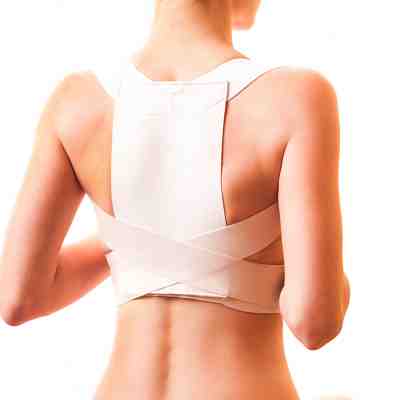
The Posture corrective brace can be a great tool for educating your body. However, in my experience, wearing them without absolute necessity can often lead to further neck and back problems. Caution is required!
Posture Support Products - an overview »
Posture Support Products - what to consider and what to look out for when buying products that help improve your posture.
Travel Neck Pillows »
Tips to help back and neck pain when travelling. This article looks at Travel Neck Pillows and how to fit them properly to get the best results.
DISCLAIMER
While the content and materials contained in the articles on this website have been written & researched by Sally Ann Quirke, a professional, practising & fully qualified Chartered Physiotherapist (Physical Therapist) based in Ireland, they are provided for general information and educational purposes only. They do not constitute medical advice on any particular individual situation. Please see your Chartered Physiotherapist or other medical practitioner for full and individual consultation.
Please read the full disclaimer here.
Cookies and Privacy
By using this website, you consent to the use of cookies in accordance with our cookie policy. For more information on how we use cookies, please read our cookie policy here.