
Buttocks Pain
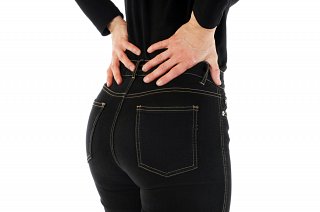
Causes of - and treatment for - Buttock Pain
Buttocks Pain? “I have a pain in my bottom” is a frequent complaint I hear on a day to day basis in my Physiotherapy Clinic. I am delighted to inform you that I continue to have great success in the treatment of buttock pain!
Buttock pain is literally a pain felt in your posterior. As a result of a lot of us having sedentary jobs (and sometimes buttocks that may be just bigger than normal!), the soft tissues surrounding the buttock bones can be compressed too much.
This compression can result in direct trauma to your buttock resulting in inflammation and pain, or it can cause postural adaptations to the tissues of your pelvis and buttocks - often resulting in injury and subsequent buttock pain.
Buttock pain commonly comes from injured structures around the buttock area itself. This is usually as a result of injury, poor posture, disuse, or else more commonly as a referred pain from areas above your buttocks mainly your sacro-iliac joint or your spine.
The anatomy of your buttock is quite complex! As well as various amounts of fat contributing to your buttocks shape and function there are many structures lying beneath this fat. There are three layers of muscle, as well as tendons, ligaments, joints and nerves.
All these structures are intimately related to each other and when one structure changes due to injury or postural tightening all the other structures are affected too. So having a healthy buttock requires a lot of structures being healthy and well!
Sponsored links
The four most common buttock pain presentations that I see are listed below:
-
Piriformis syndrome - is a muscular condition resulting in the Sciatic nerve being compressed or traumatised by a tightness or overuse of the piriformis muscle which lies deep in your buttock. How do you know if you have piriformis syndrome? Piriformis syndrome is difficult to diagnose without a detailed assessment of your buttock pain.
This is due to the other possible structures which can potentially compress the sciatic nerve and result also in buttock pain. The main example of another structure being your lumbar spine.
-
Sacro-iliac joint/ligament pain - Is another common area when irritated may result in buttock pain. The sacro-iliac joint itself may be injured and inflamed or the ligaments supporting the sacro-iliac joint may be strained and inflamed also resulting in a buttock pain. You might ask how do you know you have sacro-iliac strain?
The answer is again difficult without assessment, but you will probably have some pain just above your buttock also, as opposed to pure buttock pain.
-
Ilio-lumbar ligament - also can cause buttock pain if strained or injured in any way. This ligament travels from the base of your spine laterally towards your waist and is commonly confused with sacro-iliac joint injuries.
- Referral from your lumbar spine - You do not necessarily have to have lower back pain to have buttock pain arising from a movement or postural problem in your lower back. This is a really common daily presentation in my physiotherapy practice. A chartered physiotherapist or physical therapist will always assess your lower back if you have buttock pain.
Symptoms of Buttocks Pain
The symptoms of buttock pain are simply, “a pain in the butt.” Pain on the bottom of the buttock, especially when sitting, and possibly also while walking, is most common. The pain may be achy, sore, stiff, dull, tight, and throbbing or any combination of these.
Usually buttock pain is eased by lying down. If you have buttock pain that is severe lying down and at night attend your medical practitioner immediately as it requires a thorough assessment to eliminate any sinister conditions.
The buttock area may also be tender and sensitive to touch. Simple tasks such as putting on one’s socks may seem almost impossible. In severe cases, sleep may be disturbed. Pain may also radiate from the buttock into the back of your leg. Buttock pain is commonly worse first thing in the morning and/or increases as the day progresses.
Without sounding too alarming - buttock pain can also be a symptom of metastatic cancer, more commonly in older people. Stress fractures in people with poor bone density is also another possibility. Again, a thorough examination will eliminate or expose these possibilities. If you have buttock pain for more than three days seek a physiotherapist’s opinion. If you require an x-ray or scan they will arrange this for you.
Treatment of Buttocks Pain
My treatment of buttock pain largely depends on the underlying injury and more specifically the cause of the injury. I treat buttock pain with manual release techniques to eliminate any tightness in the muscles, and to correct any bony mal-alignments.
It is essential at this stage to remove the cause of the buttock pain. I follow this with an appropriate strengthening and stretching programme to reduce the chances of a re-occurrence.
Where poor posture is the root cause, I will help you with posture correction learning how to actively use your muscles to improve your posture, and passively assisting posture with sitting aids where useful. However, I would like to point out that I generally feel sitting devices (see back pain relief products) are over-used in many situations.
A physiotherapist will give you some simple strength exercises to do at your desk - these can eliminate your problems more effectively. Never rely on sitting devices without addressing the underlying muscles that should be assisting you to sit correctly. Sitting devices used alone can result in your back getting weaker.
Buttock pain caused by a joint in your pelvis or lumbar spine being out of alignment will need physiotherapy correction. For my own clients, I use manual techniques to correct your alignment followed by a home exercise programme to maintain this correction while the muscles strengthen around the area.
These exercises are very important as if you only have the joint correction without correcting the muscles around it; the problem is much more likely to re-occur. Too often once the buttock pain is gone patients fail to complete their exercise programme. Always see your rehabilitation through to the end to ensure your buttock pain won’t arise again.
Buttock pain arising from a strained ligament is a juicy one! In order for the ligament to heal the strain must be taken off it and the surrounding muscles re-educated to perform their role more effectively. Most ligament related buttock pains are a result of poor sitting posture, where, over time, excess pressure on a ligament in the pelvis results in inflammation and scarring of this ligament eventually causing buttock pain.
Long term resolution of this common condition relies primarily on a correct diagnosis and subsequently on a correct postural education programme to facilitate healing over time. Good sitting posture is also essential in order to prevent many other sitting-related back injuries from occurring. Finally, treatment of buttock pain arising from the lumbar spine requires correction of the dysfunctional joint, stretching of the sciatic nerve once it is unloaded, and strengthening of the muscles around it.
Exercises for Buttocks Pain
Exercises for buttock pain will vary greatly depending on the cause and type of dysfunction that you have. I am not willing to prescribe to a client without first seeing the specific situation - but, in summary, keep moving and stretching your muscles well.
I feel strongly that buttock pain should not be self-managed without a good professional opinion, as if it is poorly managed or mis-diagnosed further problems will potentially appear. So, after understanding the nature of your buttock pain, I ask you to seek professional advice and help. “If in doubt - shout”.
Also - another form of pain that you may be experiencing in this area is Coccyx pain (coccydynia). This is a pain on your sitting bone that causes great discomfort when you try to sit down. Read more about Coccyx Pain.
Sponsored links
DISCLAIMER
While the content and materials contained in the articles on this website have been written & researched by Sally Ann Quirke, a professional, practising & fully qualified Chartered Physiotherapist (Physical Therapist) based in Ireland, they are provided for general information and educational purposes only. They do not constitute medical advice on any particular individual situation. Please see your Chartered Physiotherapist or other medical practitioner for full and individual consultation.
Please read the full disclaimer here.
Cookies and Privacy
By using this website, you consent to the use of cookies in accordance with our cookie policy. For more information on how we use cookies, please read our cookie policy here.